
Our recent posts on tariff refunds focused on businesses that paid duties directly to U.S. Customs. Most small businesses did not. Yet tariff costs can still reach their invoices, often months later. New research from the Federal Reserve Bank of New York shows how this plays out.
What the Research Shows
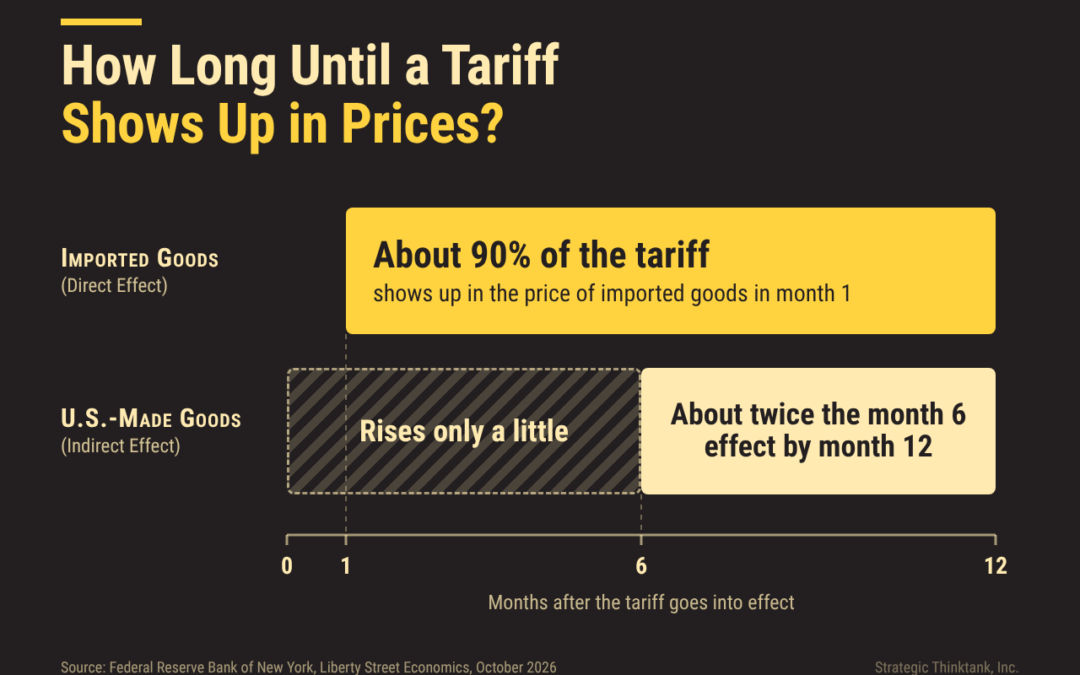
Researchers estimate that roughly 90% of a tariff appeared in the prices of imported goods within the first month. Prices of U.S.-made goods moved more slowly. They rose only a little in the first six months. By month twelve, the tariff’s effect on those prices was about twice what it had been at month six. The study examines consumer goods prices, not small business expenses. Still, its findings offer useful insights for owners managing costs, pricing, and financing.
As a Buyer: Did Your Supplier’s Increase Arrive?
“Made in the USA” does not mean tariff-free. Domestic manufacturers buy imported materials, and tariffs raise what they pay for them. Because tariffs also raise the price of competing imports, they feel less pressure to hold their own prices down.
Refunds go to whoever paid Customs, as our May 21 post noted. If your supplier raised prices and linked it to tariffs, ask whether they received a refund and when it will reach you as a credit. Check your contract to see what it says about this.
As a Seller: How Did You Manage the Gap?
A tariff raises the price of the goods themselves, but retail prices rise by a smaller percentage, because shipping, wholesale, and retail costs, which the tariff does not touch, make up about half of the price. A business holding a fixed dollar margin and one holding a percentage markup will price the same cost increase differently.
In December 2025, we reported Bank of America data showing costs from all causes up 18% over a year while prices rose 12%. Because costs arrive in two waves and many price lists change only once, timing may explain part of that gap. Did your pricing absorb the increase in dollars or in percentage?
As a Borrower: Can You Explain the Margin Squeeze?
If your margins declined, lenders can see it in your financial statements. As we noted in April, flat sales with rising costs make the financial story harder for lenders to defend.
An owner who can show when a supplier raised prices, and what was done in response, can give a lender context the numbers alone do not. What story do your financial statements tell for the months after a supplier raised prices?
What Tariff Costs Mean for Your Business
One cost, three timelines: when suppliers raise prices, when you adjust yours, and when the impact appears in your financial statements.
For many owners, that cycle has played out. Others may still have increases coming, including from tariffs on Canadian goods added in August. Either way, the longer the gap between a supplier’s increase and your own price change, the longer your margin absorbs the difference.
Our Becoming Bankable® program helps business owners build and hold a lender-ready profile as conditions change.
Schedule a free discovery session to discuss your capital readiness.