
November is National Entrepreneurship Month, a time to recognize those who start businesses and those who carry them through the harder stages of growth.
Entrepreneurs are known for vision, determination, resourcefulness, and a willingness to take calculated risks. Those qualities often turn an idea into a business that works.
They can also become the limit. The strengths that built the business can start to constrain its growth, which raises a question every established owner eventually faces:
Has your leadership evolved as quickly as your business?
When Entrepreneurial Strength Becomes a Constraint
In the early years, successful owners do nearly everything. They make the key decisions, manage customers, watch the finances, solve problems, and bring in new business. Their personal involvement is often the company’s biggest advantage.
As the business grows, that same hands-on approach can become a bottleneck. In their 1983 Harvard Business Review article, The Five Stages of Small-Business Growth, Neil Churchill and Virginia Lewis described how the demands on an owner change as a company grows, including the need to delegate and to put more formal systems in place.
The owner’s ability is not the issue. The business now needs a different kind of leadership.
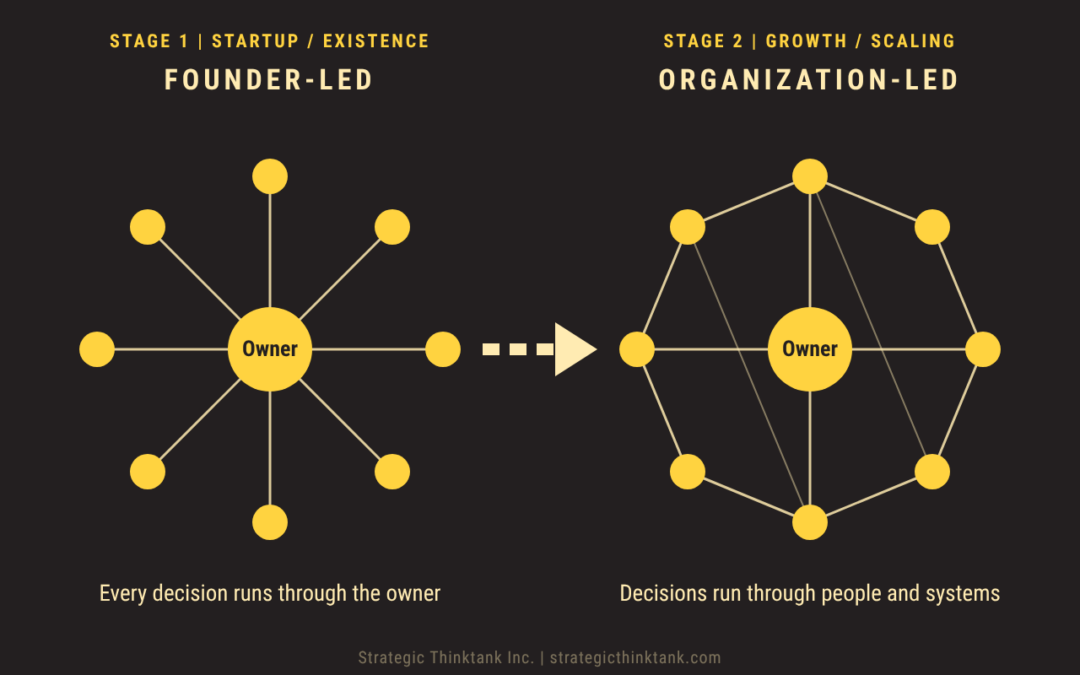
From Founder-Led to Organization-Led
Second-stage businesses face a specific shift: from a company that runs on its founder to one that runs on capable managers, reliable systems, and clear responsibilities. Harvard Business School professor Gary Pisano makes a related point in How Fast Should Your Company Really Grow?: sustainable growth requires a company’s capabilities and resources to keep pace with its expansion.
The shift keeps the entrepreneurial spirit and builds it into how the business operates: resourcefulness becomes repeatable processes, and decisiveness is backed by accountable managers and numbers the owner can rely on.
Why This Matters to Lenders
A business can have strong revenue, loyal customers, and a capable founder and still carry financing risk. Lenders can also weigh the experience of the management team, whether the business can continue without its key people, and how much of its performance rests on one individual.
In practical terms, a lender is asking what happens to repayment if the owner is unavailable. Management depth, clear checks on how money is handled, and a plan for who steps in are part of the answer.
A successful entrepreneur builds a business. A successful second-stage leader builds an organization that can succeed without them.
The Next Stage
For established owners, the next gain may not come from working harder or taking on another opportunity. It may come from building a business that does not need them for every decision.
Our Becoming Bankable® Framework treats growth and capital readiness as connected. The organizational strength that supports growth also makes a business a stronger borrower.
To see how your leadership and operations would look to a lender, schedule a free discovery session.