
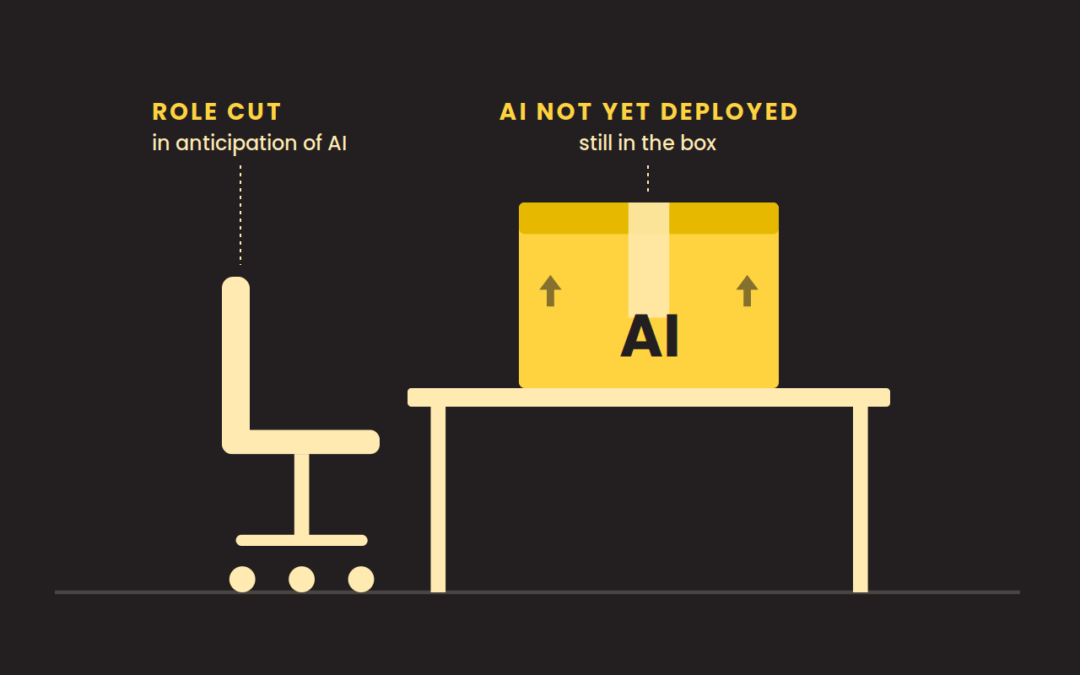
In June, we looked at why most small businesses aren’t using AI yet. New research from Goldman Sachs shows this isn’t a small-business problem, or even an American one. AI adoption remains low worldwide, yet many large employers cut hiring anyway.
Global AI Adoption Is Still Low
Combining 11 national surveys, Goldman found that even in the leading economies, France, the United States, the Netherlands and the United Kingdom, only 15% to 20% of businesses use AI. Major emerging markets sit at 10% to 15%.
If you feel behind, you are in the majority. And adoption here means using AI at all, not deploying it at scale.
Employees Report More Use Than Employers
Federal Reserve researchers report that 18% of US firms say they use AI, while 41% of US workers say they use generative AI in their jobs. The surveys measure different things, and most workers are employed by larger firms, which adopt faster. Your business may not have adopted AI, but some of your employees may already be using it, with or without your guidance.
The Hiring Cuts Came First
Job openings in AI-exposed industries began slowing in the second half of 2022, when few companies used the technology. Goldman’s economists suggest employers re-evaluated hiring plans based on what AI might do, not what it was doing.
American employers appear to have reacted most strongly.
The pullback is global, but Goldman finds the outright negative impact clearest in the US, where employment in information and communication services, which include software publishing, telecommunications and data processing, has fallen below its long-run trend. Other developed countries with similar AI adoption have held near trend.
Some Are Now Hiring Back
Separately, a Gartner survey of 321 customer service leaders found only 20% had reduced staff because of AI. Gartner forecasts that half of the companies making those cuts will rehire for similar roles by 2027. Companies that cut and then rehire pay twice: once to let people go, and again to refill the roles.
What This Means for Your Business
Small US firms largely sat this cycle out, with adoption under 20% among those with fewer than 20 employees.
That slower start gives you the chance to adopt AI in the right order: start with how your team already uses AI, define the problem, build your AI stack around it, measure the capacity you gain, then decide what changes.